What Is EMDR Therapy and How Does It Work?
By: Stephanie Godwin, MA, LMFT
EMDRIA Certified Therapist & Consultant
EMDR — which stands for Eye Movement Desensitization and Reprocessing — is an evidence-based form of psychotherapy that helps the brain process and release the emotional weight of traumatic memories. It does this through bilateral stimulation: rhythmic, left-right sensory input, most commonly in the form of guided eye movements.

Unlike traditional talk therapy, EMDR doesn't ask you to spend hours narrating your past. Instead, it works directly with the way your brain stores difficult experiences — gently supporting it to do what it was always designed to do: heal.
EMDR is an integrated approach to therapy that works to help release the negative beliefs, emotions, and uncomfortable sensations stuck in the body related to past events.
How was EMDR discovered?
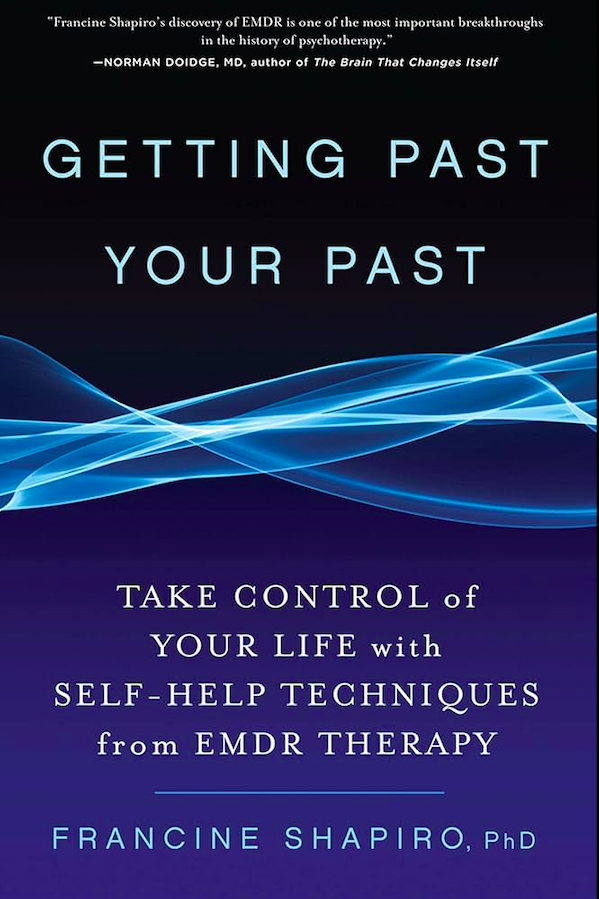
EMDR was discovered somewhat by accident. In the late 1980s, psychologist Dr. Francine Shapiro was walking through a park when she noticed something unusual: as her eyes moved back and forth naturally while she walked, the distressing thoughts she had been turning over in her mind seemed to lose their intensity.
Intrigued, she began testing the idea that these lateral eye movements might be doing something meaningful — that they might be helping her brain process and release the emotional charge attached to difficult memories. That observation became the seed of decades of research, clinical development, and ultimately a therapy now used by thousands of practitioners worldwide.
Today, EMDR is recognized by the World Health Organization, the American Psychiatric Association, and the U.S. Department of Veterans Affairs as an effective treatment for PTSD, trauma, and anxiety disorders, with a growing body of evidence supporting its use for other mental health conditions as well.
How does EMDR work?
To understand how EMDR works, it helps to first understand what happens in the brain when we experience something overwhelming.
When we go through a traumatic or deeply distressing event, it can disrupt our brain's natural ability to process the experience. Rather than being stored as an ordinary memory — one we can recall without reliving — the event can become maladaptively stored: stuck, fragmented, and emotionally raw.
Think of it this way.
Trauma memories get stuck in your brain like a rock. When something in your environment brushes up against it — a smell, a sound, a look on someone's face — it can trigger the same beliefs, emotions, and physical sensations you felt when the original event happened. That's how unprocessed trauma works.
These stuck memories can resurface as flashbacks, intrusive thoughts, emotional reactivity, or physical tension — even when the original event happened years or decades ago. The brain, in essence, keeps responding as though the threat is still present.
EMDR works by using bilateral stimulation — typically guided eye movements, but sometimes tapping or sound — to activate the brain in a way that supports it to finally process what it couldn't process before. One leading theory is that this bilateral activation mirrors what happens during REM (rapid eye movement) sleep, the phase of sleep in which the brain naturally consolidates and processes memories and emotions.
While researchers are still uncovering exactly why EMDR is so effective, decades of clinical experience point to a consistent outcome: bilateral stimulation appears to reduce the vividness and emotional reactivity of traumatic memories, allowing them to be integrated rather than endured.
What does healing actually look like?
One of the most common things people notice after EMDR therapy is that they can remember difficult events from their past without being flooded by them. The memory is still there — but it no longer carries the same emotional weight.
EMDR works on three levels simultaneously — the cognitive (the negative beliefs we hold about ourselves), the emotional (the feelings that became frozen in time), and the somatic (the physical sensations stored in the body). True healing, in our experience, happens when all three are addressed together.
That's what makes EMDR particularly well-suited to a holistic approach to care — it doesn't just treat the mind. It supports the whole person.
Curious whether EMDR might be right for you?
We'd love to answer your questions and help you take the next step — at whatever pace feels right.
Resources
More on EMDR