By: Lauren A. Lima, MA, LMFT
RLT Level I Therapist & Gottman Lessons in Love Singles Leader
Your partner seems quieter than usual. Their tone sounds slightly off, or an ordinary moment leaves you unexpectedly hurt, alerting your nervous system just enough to tip it toward hypervigilance. Before you can make sense of what’s happening, something in you has already decided what it means, and you feel rejected, uneasy, or convinced that something is wrong.
Most people call this a gut feeling. Some call it intuition. Far fewer stop to ask where it’s coming from.

Sometimes what feels like intuition is an accurate read of something happening right now. Other times, it’s an older emotional experience that has become familiar enough to feel instinctive. Sometimes it’s both.
The challenge is taking what you feel seriously without letting old fears decide what it means. Deeper intimacy isn’t only about listening to your partner. It begins with getting curious about what you’re hearing within yourself.
Is It Intuition or Anxiety?
In psychology, intuition is usually described as the rapid recognition of a pattern in what is happening now, while anxiety pulls your attention toward uncertainty and anticipated threat. Because both draw on memory and emotional learning, they can feel almost identical. So, the difference rarely shows up in how a feeling presents, and more often in what it is responding to.
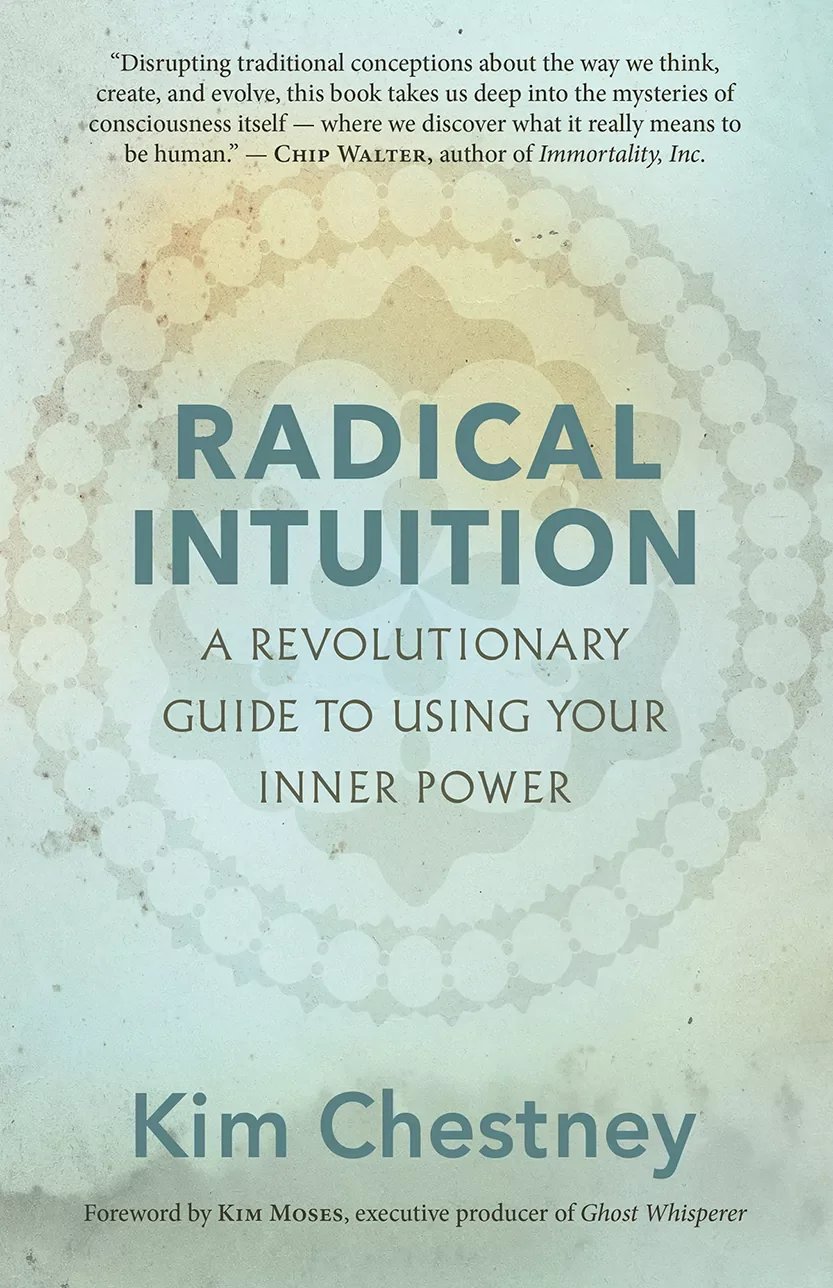
Kim Chestney, author of Radical Intuition: A Revolutionary Guide to Using Your Inner Power, draws the line more sharply. She describes intuition as a natural capacity for inner knowing that grows stronger with practice, and in her view, it isn’t shaped by conditioning or past experience—fear is. Much of her book teaches readers to tell intuition apart from fear and the other voices in their heads, a distinction that carries extra weight in intimate relationships, where vulnerability raises the stakes of every feeling.
Fear has its own kind of certainty, and it often arrives fast enough to pass for intuition. It’s worth slowing down when:
An assumption starts to feel like a fact.
A disappointment that hasn’t happened yet feels inevitable.
A new situation feels strikingly similar to something you’ve lived before.
How Do Old Wounds Show Up in a Relationship?
Early relationships can shape what you expect from closeness. What’s harder to see is how an old adaptation plays out in real time and how easily a partner misreads it.
For example, picture someone who learned that disagreement puts connection at risk. Even in a loving, secure relationship, an ordinary difference of opinion can stir up a sense of inadequacy, so they instinctively go along with their partner to protect the closeness. Their partner reads this as agreement and never learns that something important went unsaid. What began as one person’s strategy for staying safe becomes a pattern neither partner fully understands.
The instinct behind a pattern like this was often accurate at the time. A child who could sense a parent’s mood shifting before anyone said a word was usually right and being right kept them safe. Relational Life Therapy calls this part of a person the adaptive child: it works fast, feels certain, and stays loyal to old rules, even in a relationship where the circumstances are different. Understanding what a reaction once protected you from makes it easier to meet yourself with compassion and to examine, explain, and change it.
How Can You Tell If It’s Intuition or an Old Wound?
Say your partner turns down an invitation to spend time together. The reason may be simple, but the disappointment wakes up a familiar sense of being unimportant or unwanted, and one moment quickly grows into a story about the whole relationship:
They don’t want to spend time with me. I’m not a priority. Something between us is changing.
Those thoughts can feel convincing, especially when they echo past experiences of rejection or inconsistency. But the intensity of a feeling doesn’t prove the accuracy of the conclusion you draw from it.
Before accepting or dismissing the reaction, separate what you’ve observed from what you’ve interpreted. Three questions help:
What do I actually know about this situation?
What meaning am I assigning to it?
Does this remind me of something I’ve felt before?
These questions let a feeling be real and worth your attention while its source is still uncertain. You don’t have to act on every feeling the moment it arrives. And when you’re less compelled to defend your first interpretation, you can approach your partner with curiosity instead of accusation, and with vulnerability instead of self-protection.
When Should You Trust Your Gut in a Relationship?
Trust a gut feeling when it holds up after you’ve separated what you observed from what you assumed, and when it reflects a consistent pattern rather than a single moment.
Not every uncomfortable feeling is rooted in the past. Your gut may be accurately picking up on emotional unavailability, disconnection, or needs that keep going unmet, and even anxiety can flag something that deserves attention. Exploring your history should never become a way to explain away a legitimate concern—least of all a sense that you’re not safe.
Be wary if a partner routinely dismisses your concerns as “just your past.” Someone who uses your history to end a conversation is asking you to doubt your perception rather than look at their behavior. That pattern deserves a therapist’s outside perspective, not more self-reflection on your own.
What Is Emotional Attunement?
Emotional attunement is the ability to recognize, understand, and respond sensitively to another person’s emotional experience. In The Science of Trust: Emotional Attunement for Couples, Dr. John Gottman describes attunement as a couple’s ability to work through painful emotional moments together, and he breaks it into six skills known as ATTUNE:
Awareness: Recognizing your partner’s emotions.
Turning toward: Responding to those emotions instead of withdrawing or dismissing them.
Tolerance: Accepting that two people can experience the same situation differently.
Understanding: Seeking the meaning behind your partner’s feelings.
Non-defensive listening: Staying open without rushing to justify or protect yourself.
Empathy: Responding with compassion to your partner’s emotional world.
The goal isn’t agreement or quick problem-solving. It’s the capacity to stay connected when your perspectives differ.
Old wounds can shape how easily you can practice these skills. Imagine one partner says they’ve been feeling lonely. If the other has a history of feeling criticized, or of believing their efforts were never enough, that sentence can land as a verdict. Before they’ve taken in what their partner said, they’re explaining their intentions and listing everything they’ve done. An invitation for connection gets received as an accusation.
This is where self-awareness and attunement meet. When you can recognize a sensitivity from your past shaping your response, you can separate your partner’s experience from the meaning you’ve automatically assigned to it, acknowledging your own discomfort while staying curious about what they’re trying to tell you.
That creates room for two emotional realities at once. One partner can feel lonely without the other having neglected them on purpose. The other can feel inadequate without that feeling canceling out the loneliness being expressed. Neither person’s experience has to be dismissed for the other to be understood.
Attunement doesn’t require giving up your perspective or taking responsibility for every feeling your partner has—only accepting that their emotional reality is valid even when it differs from yours. Side by side, Chestney’s and Gottman’s books add up to a single practice: listen inward first, then carry what you notice outward, toward the person you love.
How Do You Make Room for the Past Without Reliving It?
Knowing where a reaction comes from isn’t the same as knowing what to do with it. You can understand exactly why vulnerability feels risky and still feel hurt, anxious, or afraid. Awareness won’t stop those feelings, but it gives you a choice in how you respond:
Putting words to what you feel when you’re misunderstood, instead of going quiet
Naming the vulnerability beneath a need for reassurance, rather than seeking it through criticism or defensiveness
Staying with the discomfort of responses that feel unfamiliar at first
These shifts take time, and they don’t happen in isolation. When one partner can name what a moment is touching, the other gets the chance to respond to the hurt underneath, not just what’s showing on the surface.
That doesn’t make your partner responsible for healing wounds they didn’t create. Naming an old wound explains a reaction; it doesn’t excuse it, and it doesn’t replace the repair you may still owe.
We do not have to erase our past to build meaningful relationships in the present. We can learn to understand what we carry, recognize when it asks for our attention, and become more intentional about what we allow it to shape.
Frequently Asked Questions About Intuition and Old Wounds
Q: How can I tell the difference between intuition and anxiety in my relationship?
A: Look at what the feeling is based on, not how it feels. Intuition and anxiety can both feel urgent and certain, and no single sensation reliably separates them. Ask what you’ve actually observed, what you’re assuming, and whether the reaction resembles something you’ve felt before. Time to reflect, and clarification from your partner when appropriate, builds that discernment.
Q: Why do small moments with my partner feel so big?
A: Often because of what the moment resembles, not just what it is. When an ordinary event echoes an old hurt, what you feel carries the weight of both. That doesn’t make the feeling wrong—it’s a cue to ask what you actually know, what you’re assuming, and whether you’ve felt this way before.
Q: What is emotional attunement in the Gottman Method?
A: Emotional attunement is the ability to recognize, understand, and respond sensitively to your partner’s emotions. Dr. John Gottman’s ATTUNE framework breaks it into six skills: awareness, turning toward, tolerance, understanding, non-defensive listening, and empathy. Attunement lets partners feel understood even when they disagree, which strengthens trust and keeps difficult conversations constructive.
Q: Does having an emotional trigger mean I’m reacting to an old wound?
A: Not necessarily. A strong reaction can be shaped by earlier experiences, or it can be an understandable response to something genuinely concerning in the present. Exploring a trigger isn’t about dismissing the feeling; it’s about understanding what’s contributing to it while keeping your interpretation open to question.
Q: How do I tell my partner I’m reacting to something from my past?
A: Keep it simple and specific, something like: “I think this is hitting an old place for me, and I want to understand it before I react.” That gives your partner context, not a verdict, and turns the moment into something you can both look at. If this keeps happening, individual therapy, couples therapy, or EMDR—when specific painful memories are involved—can help.
Curious about where you stand in your relationship—or ready to explore what comes next?
We’d love to answer your questions and help you take the next step at whatever pace feels right.
Resources
More on coUPLES & coMMUNICATION